> For the complete documentation index, see [llms.txt](https://support.portsip.com/llms.txt). Markdown versions of documentation pages are available by appending `.md` to page URLs; this page is available as [Markdown](https://support.portsip.com/portsip-communications-solution/portsip-pbx-administration-guide/14-call-parking/using-enhanced-call-park-on-yealink-ip-phones.md).
# Using Enhanced Call Park on Yealink IP Phones
This article explains how to use PortSIP PBX’s enhanced call park feature with Yealink IP phones, providing a streamlined call parking experience with visual notifications and one-touch actions.
***
### Supported Yealink IP Phone Models
* T3x series, download the firmware:
* [124.87.0.15 or later](https://support.yealink.com/document-detail/a4c32c2e33024d3ababfa0f67587f8f7)(recommended)
* T4x series, download the firmware:
* [108.87.0.20 or later](https://support.yealink.com/document-detail/736c56d161414e459adcad6bce73b787)(recommended)
* [T46U(T43U,T46U,T41U,T48U,T42U,T44U,T44W)-108.86.0.118.rom](https://dmfile.yealinkops.com/firmware/18facaab3c9c479e86e1707970ebe6fb/1670571333242/T46U\(T43U,T46U,T41U,T48U,T42U\)-108.86.0.118.rom)
* T5x series, download the firmware:
* [96.87.0.20 or later](https://support.yealink.com/document-detail/8e3fac67467d487ba8bac7cbf47cd511)(recommended)
* [T54W(T57W,T53W,T53,T53C,T54,T57)-96.86.0.118.rom](https://dmfile.yealinkops.com/firmware/821074fc924f43a8ad2fe494a0a5cae9/1670571488097/T54W\(T57W,T53W,T53,T53C,T54,T57\)-96.86.0.118.rom)
* T7x and T8x series, download the firmware from the Yealink website.
***
### Application Scenarios
#### Enhanced Call Park
**Enhanced Call Park** improves the traditional call park experience by replacing manual Feature Access Code (FAC) dialing with **dedicated Park and Retrieve soft keys** on Yealink IP phones.
When integrated with PortSIP PBX, Enhanced Call Park provides:
* One-touch call parking and retrieval
* Visual call park notifications
* Seamless interaction with PortSIP’s advanced call park features
***
#### Call Park
The **Call Park** service allows users to temporarily place a call on hold and retrieve it later from the same or another extension.
**Typical use case:**\
You are on an active call and need to move to another location. You park the call and retrieve it once you reach your destination.
***
#### Group Call Park
**Group Call Park** uses a hunting mechanism to park calls against an **available member of a configured Call Park group**, rather than only the original parking user.
**Typical use case:**\
If you and your colleagues are in the same Call Park group, a parked call may be placed on a colleague’s line. That colleague can retrieve the call and either handle it directly or transfer it back to you.
***
#### Call Park Notification
**Call Park Notification** provides a **visual alert** on Yealink IP phones when a call is parked for a user.
* The phone displays an on-screen notification
* Line keys or indicators light up
* The user can retrieve the call by pressing the corresponding soft key
This removes the need to dial retrieval codes.
***
#### Retrieve Park
A parked call can be retrieved by dialing the **Call Park Retrieve Feature Access Code**, followed by the extension number where the call is parked.
**Typical use cases:**
* Retrieve a call parked on your own extension
* Retrieve a call parked on a colleague’s extension, then transfer the call or notify them
> **Note:** When Enhanced Call Park is enabled, retrieval is typically performed using a **dedicated soft key** instead of dialing a FAC.
***
#### Recall
The **Recall** feature ensures parked calls are not left unanswered.
* You can configure:
* The **recall destination** (parking user or a specified number)
* The **recall timer**
* If the parked call is not retrieved within the configured time, the PBX automatically recalls the call to the defined destination.
**Example:**\
If the recall timer is set to **30 seconds**, and no one retrieves the call within that time, the PBX recalls the call to the original parking user (or the configured recall destination).
***
### Configuring Soft Keys for Visual Park
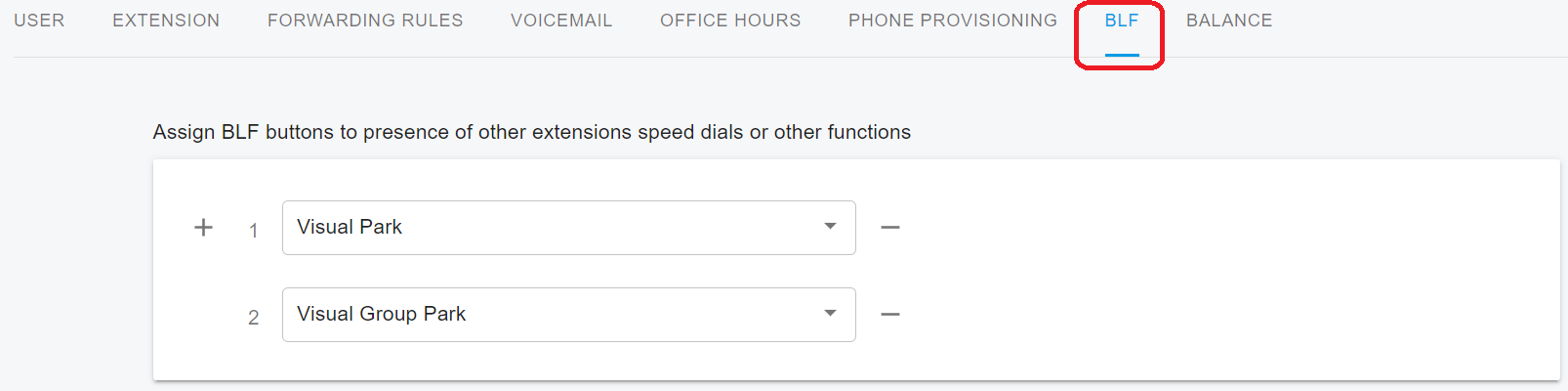
When provisioning an IP phone, configure **BLF keys** for **Visual Call Park** and **Visual Group Park** to enable one-touch call parking and retrieval.
#### How it works
* During the IP phone provisioning process, assign BLF keys to:
* **Visual Park**
* **Visual Group Park**
* After the phone is successfully provisioned:
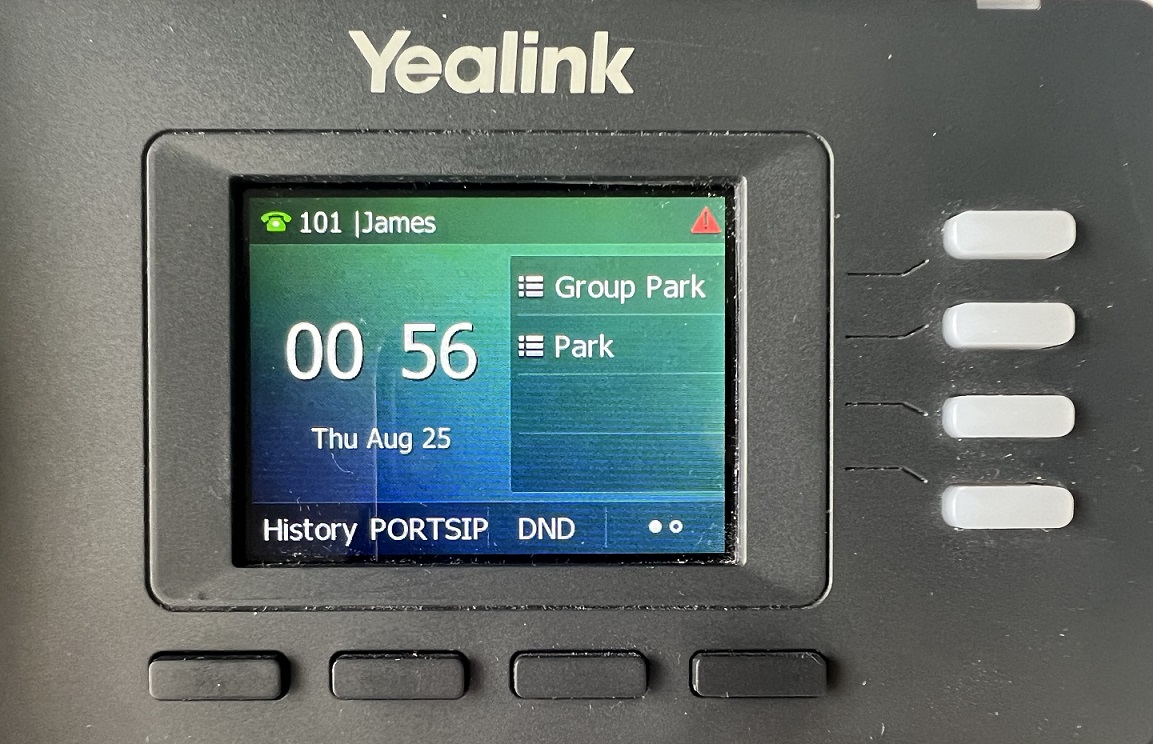
* The BLF keys display the labels **“Visual Park”** and **“Visual Group Park”**
* These keys allow users to park and retrieve calls visually, without dialing Feature Access Codes (FACs)
#### Example
In the example shown:
* User **James** has extension **101**
* BLF keys have been configured for **Visual Park** and **Visual Group Park**
* The phone displays the corresponding labels, allowing James to manage parked calls directly from the phone interface
***
### Parking a Call
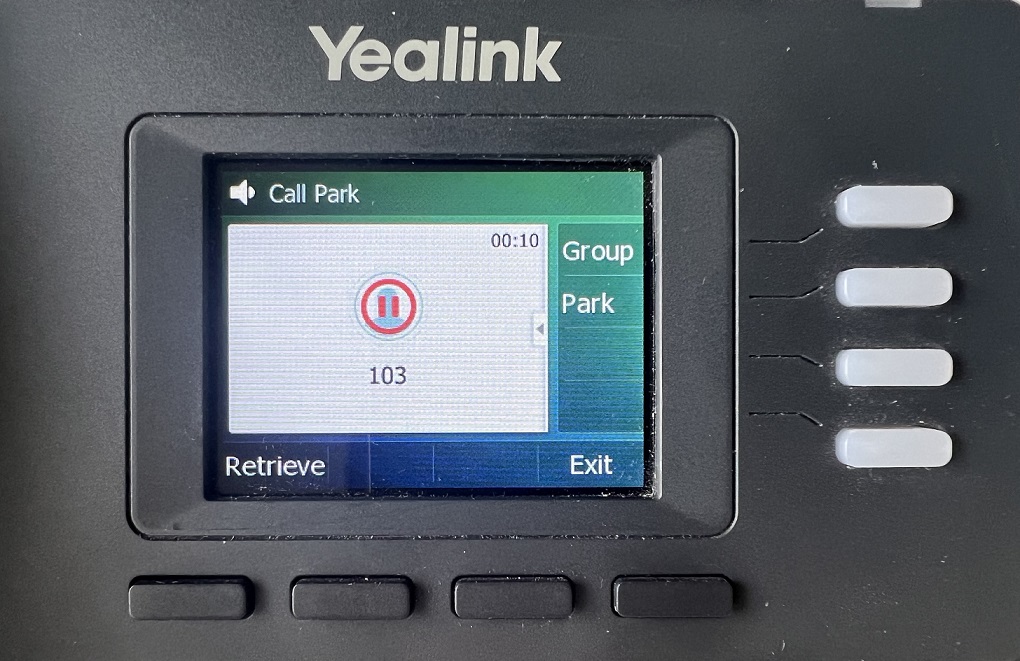
If **James** wants to park a call for his colleague whose extension number is **103**, he can do so using the **Visual Park** key—without dialing any Feature Access Codes (FACs).
#### Steps
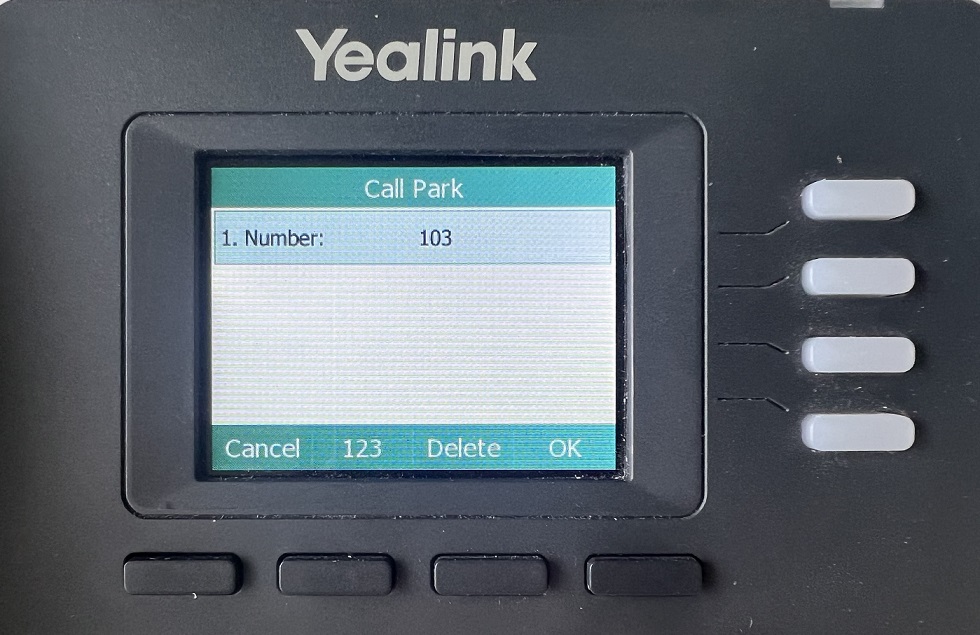
1. While on an active call, James presses the configured **Visual Park** key.
2. When prompted, he enters the destination extension number (`103`).
3. James presses **OK**.
The IP phone parks the call on **extension 103**.
***
#### Result
* The call is successfully parked on extension **103**.
* James does **not** need to remember or dial the call park FAC.
* The operation is completed quickly using on-screen prompts.
***
### Group Call Park
Group Call Park allows a user to park a call to a **Call Park group**, making the call available for retrieval by any member of that group.
#### Configure a Call Park Group
1. Sign in to the PortSIP PBX Web Portal as the **Tenant Admin**.
2. Navigate to **Advanced Services > Call Park**.
3. Follow the [configuration guide](/portsip-communications-solution/portsip-pbx-administration-guide/14-call-parking.md) to create a Call Park group.
**Example configuration:**\
Extensions **101**, **102**, **103**, **104**, and **105** are members of the same Call Park group.
***
#### Park a Call to the Group
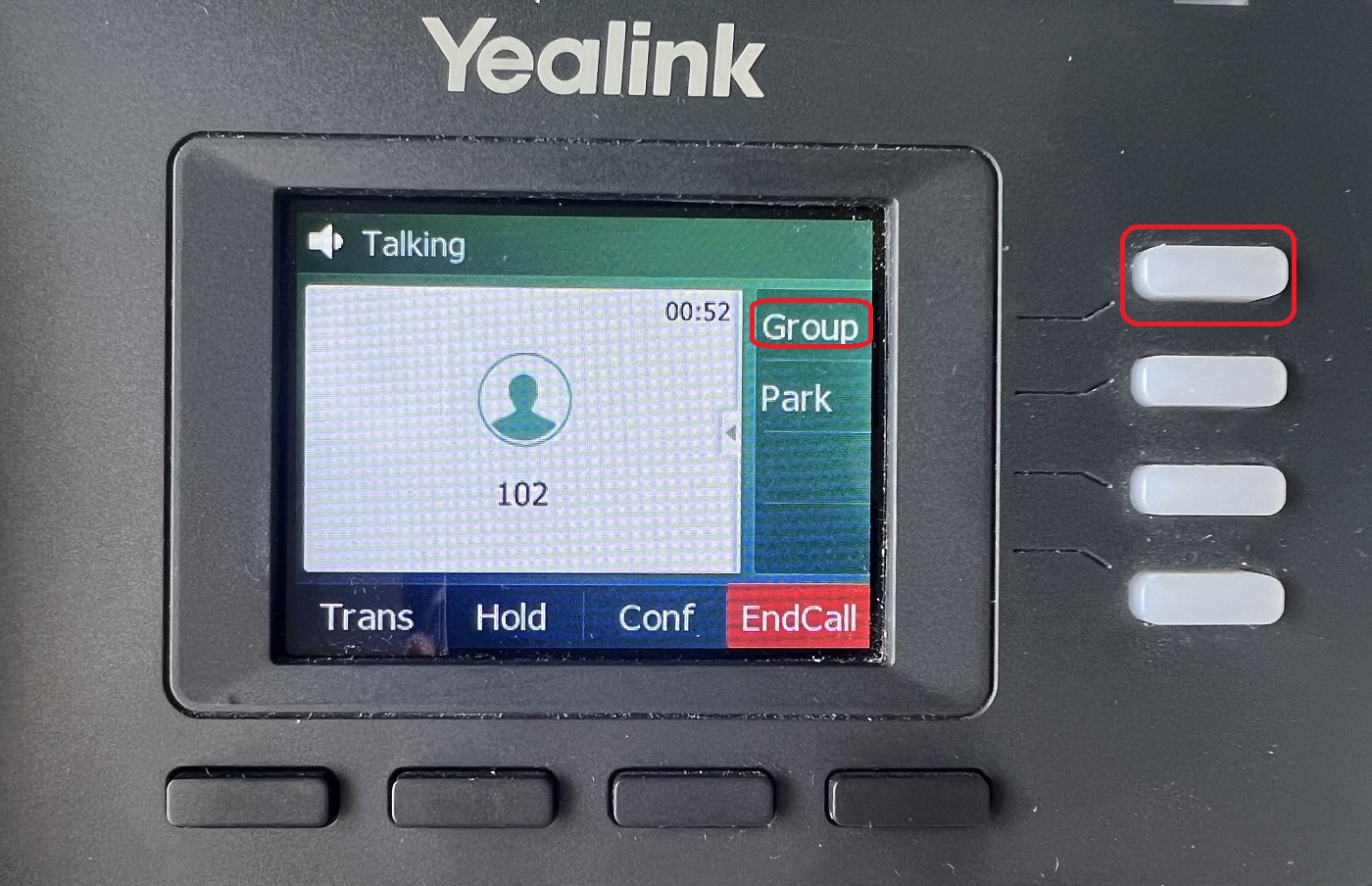
In this example:
* **James** has extension **101**
* James is on an active call with **extension 102**
To park the call to the Call Park group:
1. While on the active call, James presses the **Group Park** key on his IP phone.
2. The IP phone parks the call to the Call Park group automatically.
#### Call behavior
* As shown on the IP phone screen in the screenshot above, pressing the **Group Park** key parks the call to the group.
* **All members of the Call Park group** receive a parked-call alert notification.
* Any group member can retrieve the parked call using their device’s parked-call button or retrieval method.
> **Result:**\
> James does not need to remember or dial any Feature Access Codes (FACs). Group call parking is completed with a single key press, providing a faster and more user-friendly experience.
***
### Retrieve a Parked Call
In this example, **Alice** is on a call with **Bob**. Bob parks the call on **James’s extension (101)**.
#### Visual notification
* On James’s IP phone, a **Retrieve** label is displayed on the screen (as shown in the screenshot below), indicating that a call has been parked on his extension.
#### Retrieve the call
1. James presses the **Retrieve** soft key on his IP phone.
2. The call is immediately connected to James.
> **Result:**\
> James retrieves the parked call with a single key press and does **not** need to remember or dial any Feature Access Codes (FACs).